

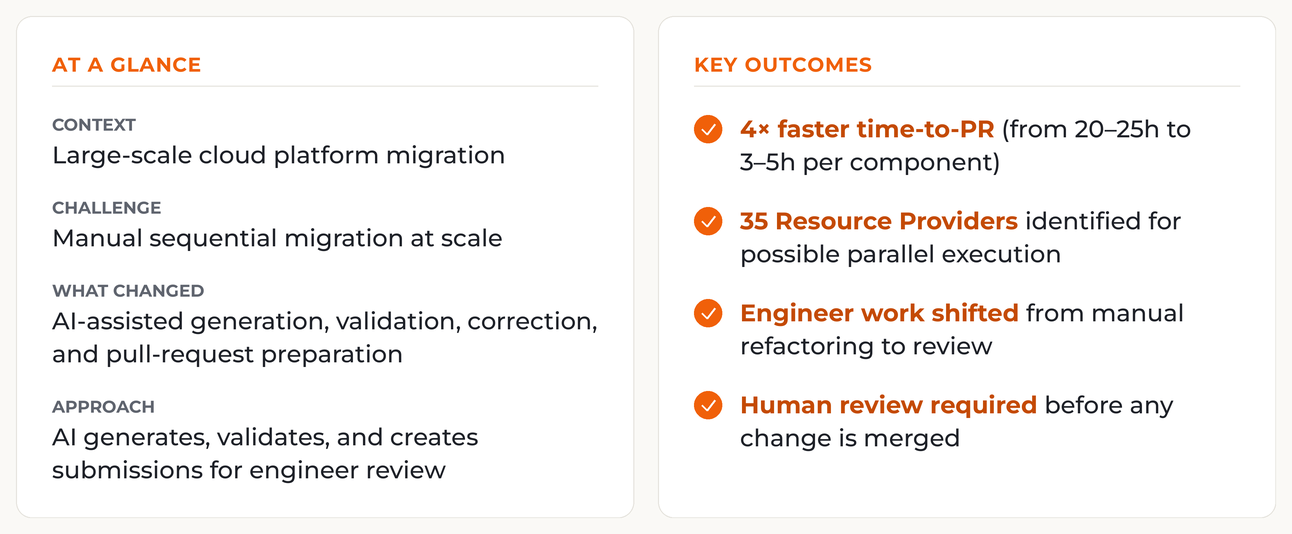
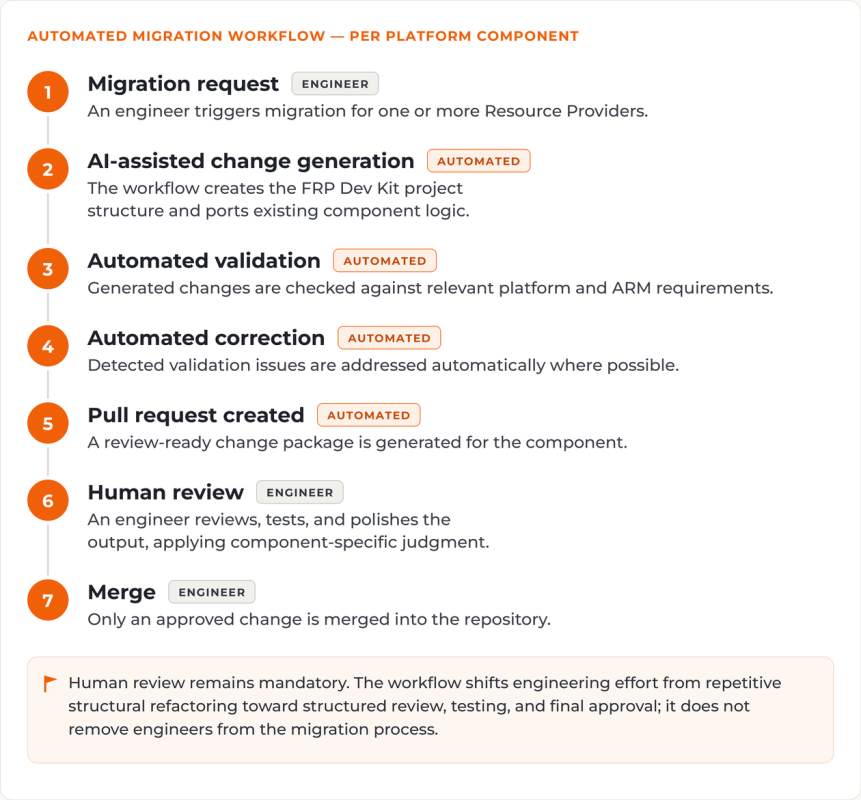
An AI-assisted migration workflow generates Dev Kit project structure, ports existing component logic, applies validation fixes, and creates review-ready pull requests. Measured time-to-PR decreased from 20–25 hours to 3–5 hours per Resource Provider, while engineers retained final review and merge control.
The challenge: a serial migration bottleneck across a large component portfolio
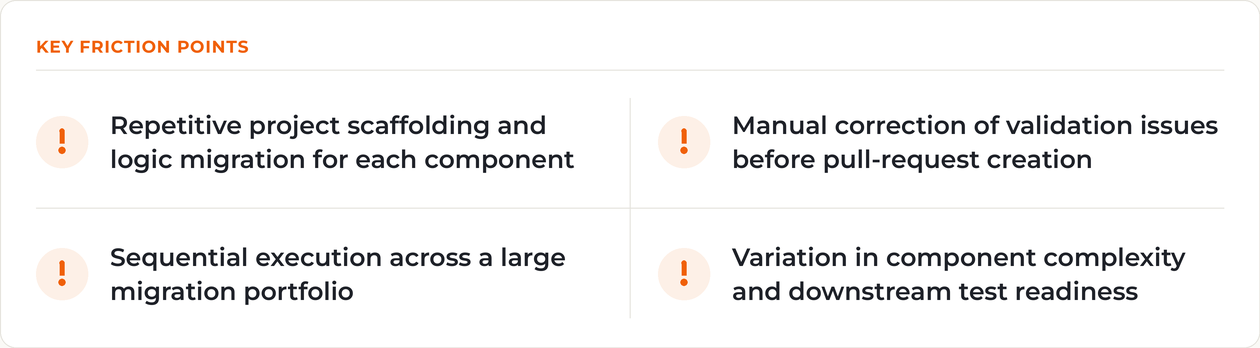
Migrating each Resource Provider to the new Dev Kit standard was repetitive work handled one component at a time, with approximately 20–25 hours of preparation per component. Across the portfolio, repeated structural work accumulated into a substantial migration workload and kept engineering capacity focused on setup and correction rather than component-specific review and judgment.
Technical approach: from serial refactoring to parallel pull-request generation
The AI-assisted migration workflow uses the existing Resource Provider source together with FRP Dev Kit templates and rules to produce a pull request ready for engineer review.
Akvelon proposed this approach. The client's FRP APAC engineering team implemented the automation, with Akvelon contributing review and additional refinements.
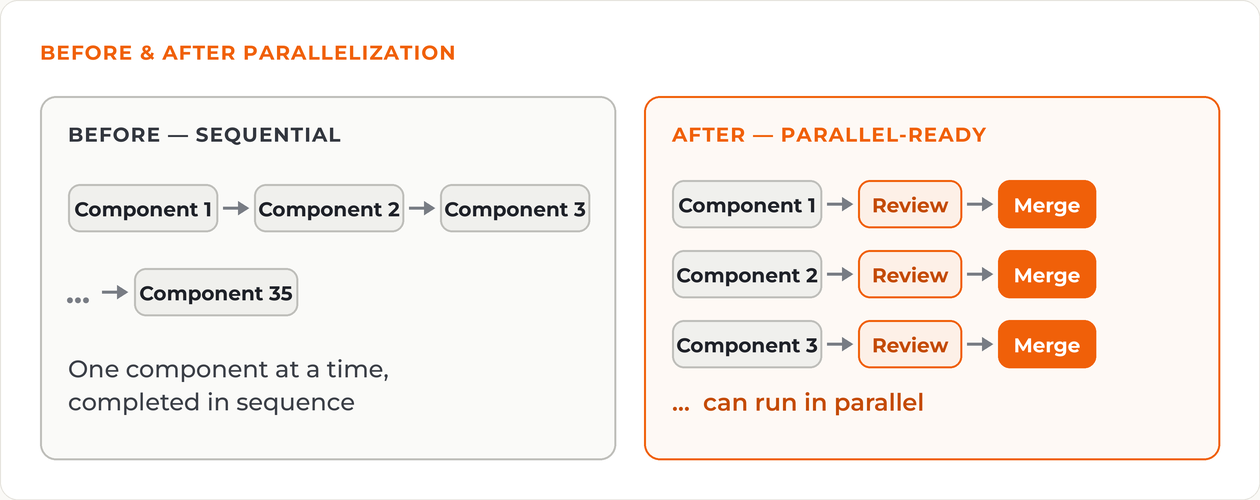
The same workflow can be triggered for multiple Resource Providers, creating a path from a sequential migration queue toward controlled parallel execution across the portfolio.
Running the same workflow across multiple components simultaneously replaces a sequential queue with a parallel operation – which is where the aggregate impact is realized.
Measured operational impact and portfolio potential
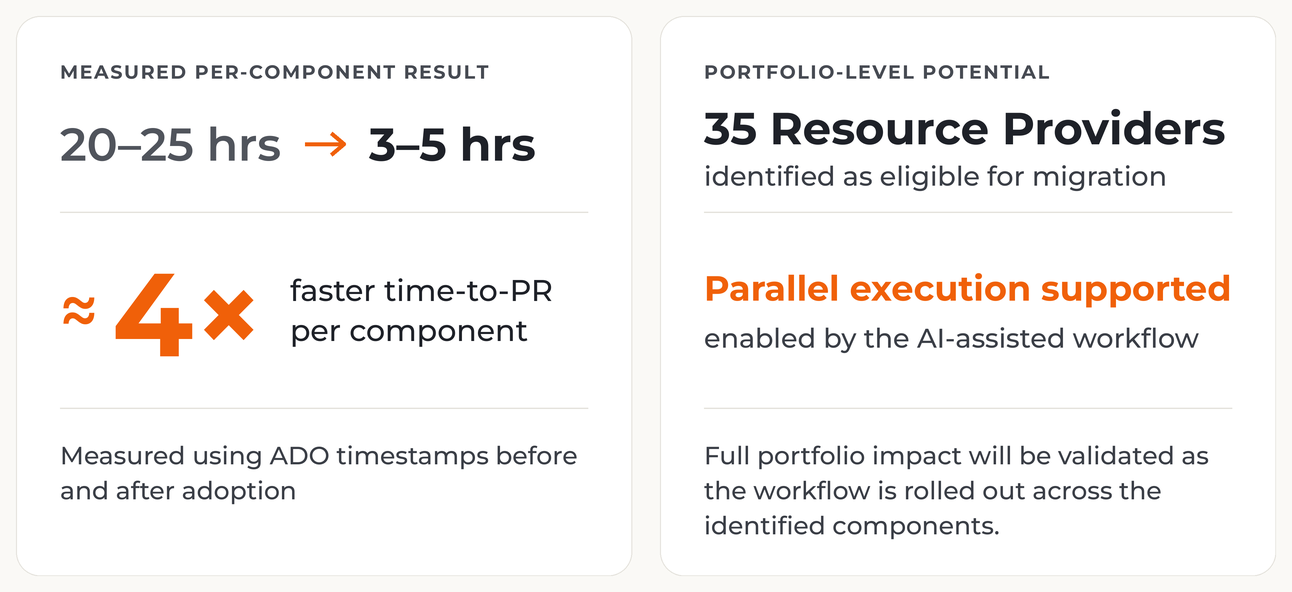
Average time-to-PR for one Resource Provider decreased from 20–25 hours to 3–5 hours, an approximately 4× speedup measured using Azure DevOps timestamps before and after adoption of the workflow.
Thirty-five Resource Providers have been identified as eligible for migration. Parallel execution creates significant portfolio-level potential, but the total program acceleration has not yet been measured across all 35 components.
Impact beyond the time saving
- Engineers spend more time on review, testing, and judgment instead of repetitive structural refactoring.
- Pull-request preparation becomes a repeatable workflow rather than a component-by-component manual exercise.
- A standardized review checklist can further improve the consistency and speed of human validation as the workflow scales.
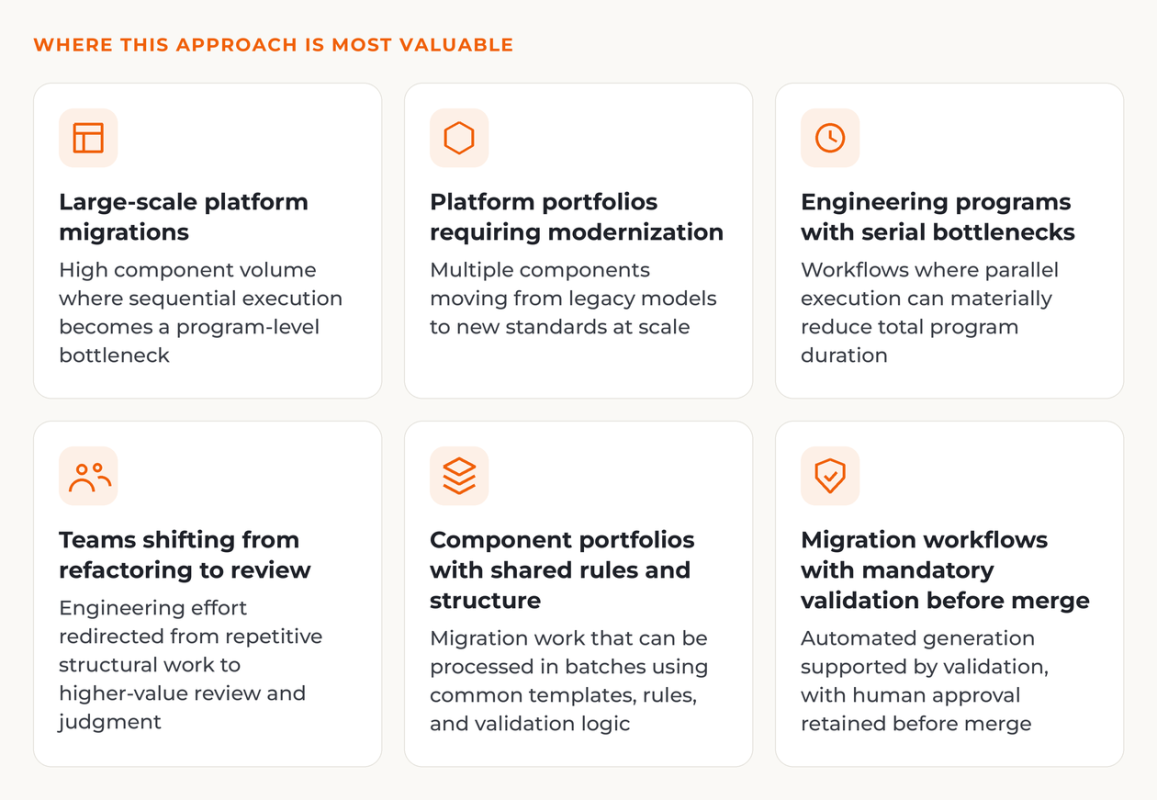
Broader relevance of this approach
The reusable pattern is most relevant where a modernization portfolio contains many components that share enough structure, templates, and validation rules to support repeatable generation. The approach is less suitable where every component requires a fundamentally different migration path or where testing dependencies prevent meaningful parallel execution.