

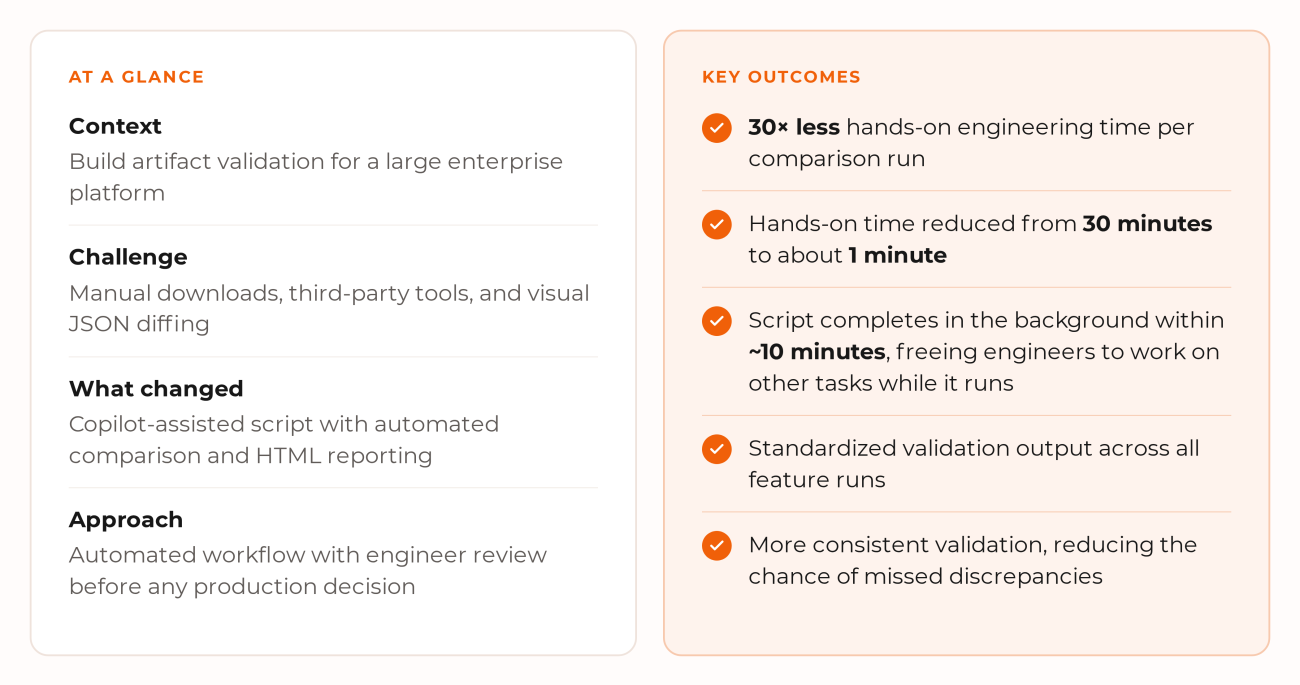
Akvelon built a Copilot-assisted PowerShell script that automates artifact download, JSON comparison, and HTML report generation for build validation. What previously took engineers around 30 minutes of hands-on work per feature run now takes about a minute of their attention – the script itself finishes in the background within about 10 minutes.
The challenge: a fragmented manual validation workflow
In a large enterprise build environment, new feature work requiring artifact safety checks involved comparing official build artifacts with pull request artifacts before production changes. The purpose was to identify configuration differences that required engineering attention.
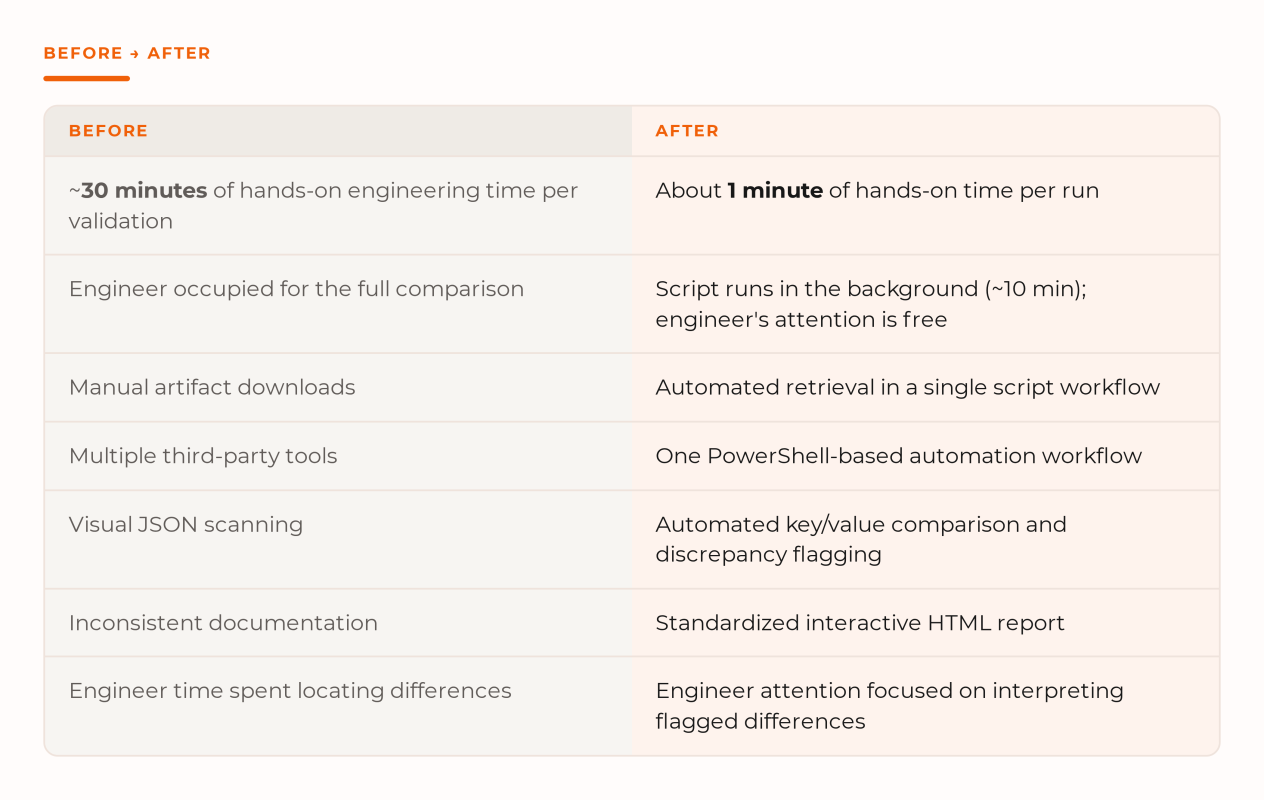
The existing workflow depended on manual artifact downloads, third-party comparison tools, and visual scanning of JSON configuration files. Each comparison took approximately 30 minutes and produced no consistent report format.
Every comparison run required engineers to collect artifacts, move between tools, inspect JSON differences visually, and document the findings. The process was repetitive and left engineers spending time locating discrepancies instead of assessing their significance.
Key friction points
- Manual artifact downloads for every comparison run
- Dependency on third-party tools with no single standardized workflow
- Visual JSON scanning with no automated flagging of discrepancies
- Inconsistent documentation of comparison results
- ~30 minutes of engineering time per comparison run
Technical approach: AI-assisted development of an automated comparison workflow
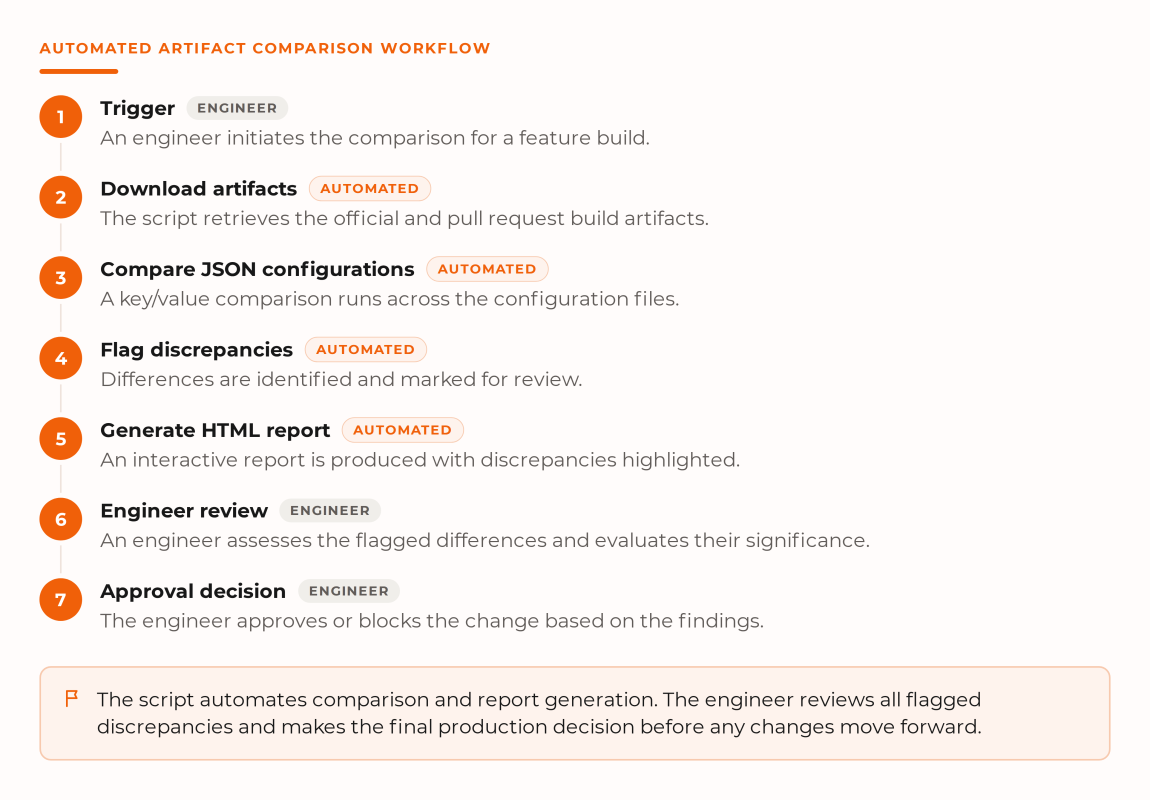
Akvelon engineers developed a PowerShell-based workflow using Copilot that downloads build artifacts, compares JSON configuration files at the key/value level, and produces an interactive HTML report with discrepancies highlighted for engineer review.
The deployed workflow does not rely on AI to decide whether a change is safe. It automates the repeatable comparison and reporting steps, while engineers retain responsibility for interpreting the results and approving or blocking the change.
Measured operational impact
Engineers' hands-on time per comparison run decreased from approximately 30 minutes to about one minute – a 30× speedup, based on average time spent actively working the comparison before and after adoption. The script itself continues to run in the background for about 10 minutes, but engineers are free to shift their attention elsewhere while it completes.
Beyond speed, each supported run now produces the same structured HTML report, regardless of who initiates the comparison. This reduces dependence on fragmented tools and manual visual scanning while giving engineers a consistent basis for review.
Broader applicability of this approach
In this implementation, Akvelon reduced engineers' hands-on comparison time from approximately 30 minutes to about one minute while keeping engineers responsible for the final decision. The current solution is scoped to JSON configuration comparison. Extending it to other artifact types or repositories would require adaptation to their data structures, validation rules, and development workflows.
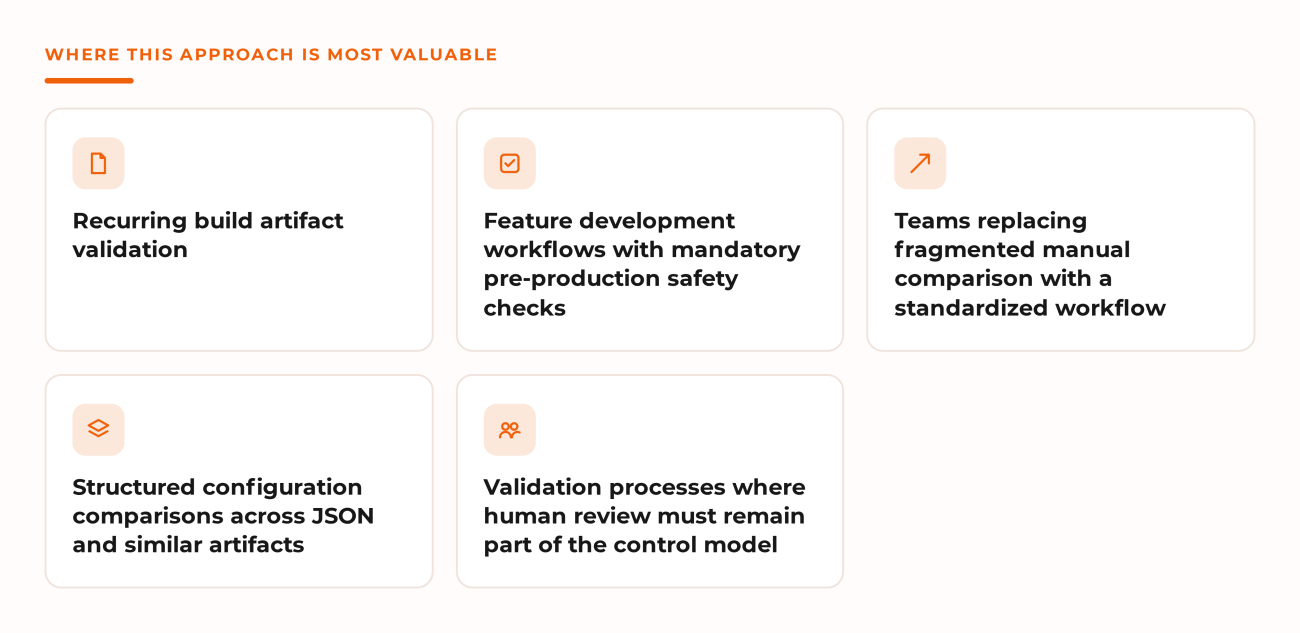
The value of this work extends beyond a single repository or JSON comparison. The same automation pattern – artifact retrieval, structured comparison, discrepancy flagging, standardized reporting, and human review – may be applied to other recurring validation workflows where inputs are structured, and the review rules can be made explicit.
Conclusion and what's next
The script is in active use across all new feature validation runs. The next step is extending coverage to additional artifact types and repositories, with usage data gathered to assess broader impact.